
HOW SOUTH SUDAN'S CONSTANT CONTRACT BREACHES GIVE RISE TO $2B PLUS INDEFENSIBLE LEGAL BATTLE
The Index Post
May 8, 2026
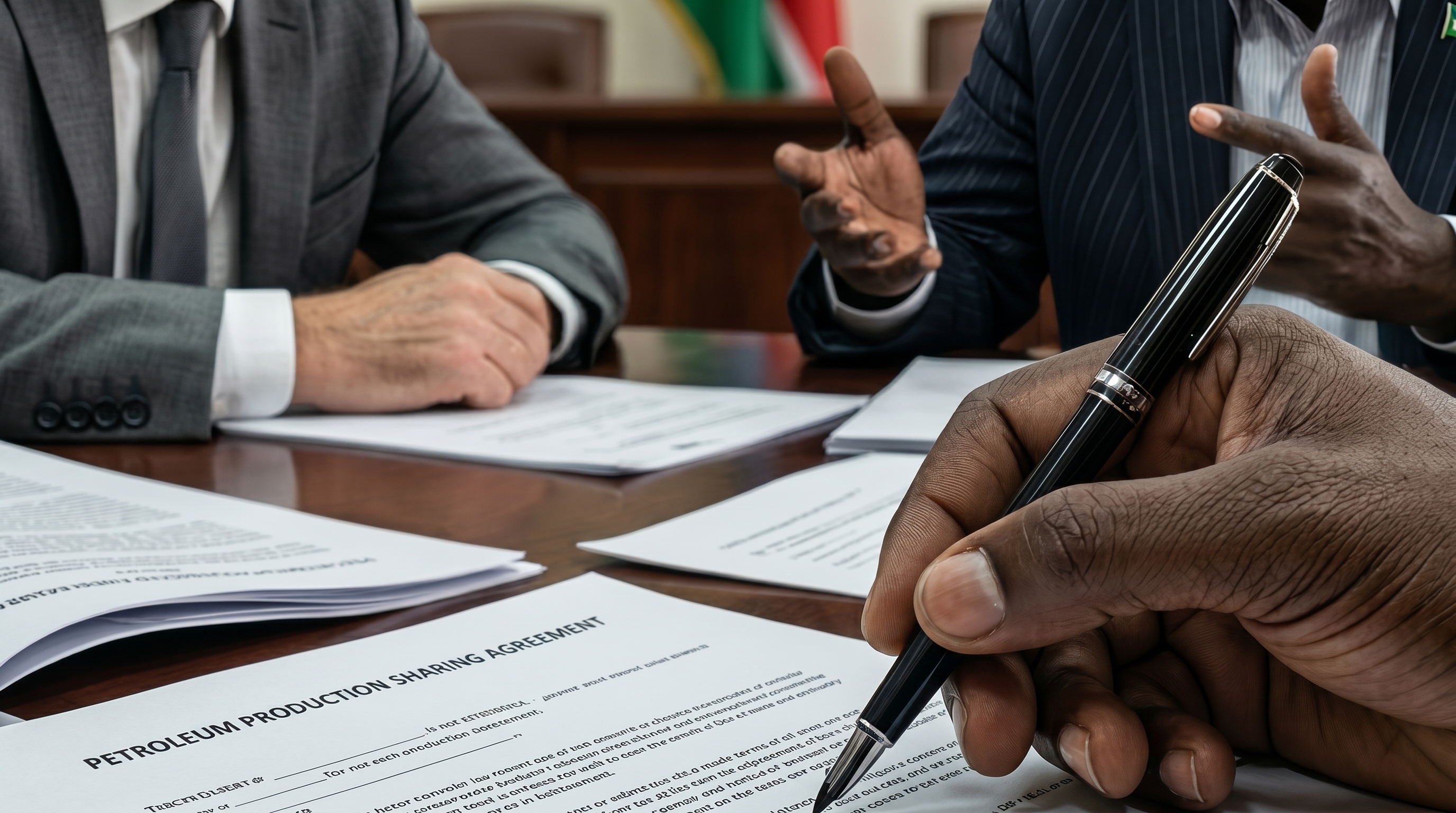
South Sudan Finance Officials at a Negotiation Session in Juba
The Republic of South Sudan is drowning in over $2.3 billion of international litigation sparked by a systemic culture of contractual bad faith and administrative paralysis. Despite progressive investment laws on the books, Juba’s habit of ignoring signed settlements and arbitrarily seizing assets has transformed the nation into a primary "no-go" zone for global capital.
Juba, South Sudan - Investors entering South Sudan are learning a brutal lesson in "Juba Law": a government signature is often worth less than the paper it's printed on. From telecommunications giants to local airlines, the state is habitually defaulting on multi-billion dollar agreements, triggering a wave of international arbitrations that threaten its economic survival.
The most staggering evidence of South Sudan’s contractual fragility is currently before the East African Court of Justice (EACJ). Reference No. 16 of 2025 features South Sudan Supreme Airlines Co. Ltd and Pan African Law Chambers LLP suing the Attorney General for failing to honor a massive $1,053,936,749.85 settlement.
The chronology of this case reveals a dysfunctional executive branch. On February 13, 2025, the parties negotiated an out-of-court settlement under the explicit supervision of the Ministry of Justice and Constitutional Affairs. The Ministry of Finance and Planning committed to settling the billion-dollar debt in 24 monthly installments of approximately $43.9 million each. Not a single cent has been paid.
This default occurred despite internal red flags. Sura Ali Lado, acting head of legal administration at the Ministry of Finance, formally warned the government on September 16, 2025, that failure to comply would expose the state to "renewed litigation and financial penalties". Even direct requests from Justice Michael Makuei Lueth, the Minister of Justice, and directives from Vice President James Wani Igga were ignored by the Ministry of Finance. This "Juba Trap"—where the Ministry of Justice signs a binding instrument that the Ministry of Finance simply refuses to fund—is now a standard risk for any entity dealing with the state.
The sovereign risk extends to the international banking sector, where South Sudan is currently battling to prevent the enforcement of a $1 billion award in a U.S. federal court. Qatar National Bank (QNB) has petitioned a court in Washington, D.C., to enforce the award after South Sudan failed to repay a $700 million loan received during its civil war years. QNB alleges that Juba and its central bank have not yet settled the award or challenged it, nearly a year after it was made by a tribunal under the International Centre for Settlement of Investment Disputes (ICSID).
The history of the QNB loan is a timeline of broken promises. After a default in 2015, the two sides struck a rescheduling agreement in 2016. In 2018, QNB provided a new $700 million term loan to help South Sudan stabilize its payments. When the government failed to make payments in 2019, QNB was forced into arbitration in 2020. The ICSID tribunal ruled in QNB's favor in January 2024, demanding full repayment. The bank’s petition to the U.S. court states there are "no grounds" to deny recognition and enforcement of the award, yet South Sudan continues to resist payment
The telecommunications sector has provided the most high-profile evidence of Juba's arbitrary regulatory environment. In May 2025, the International Chamber of Commerce (ICC) concluded arbitration with Vivacell, a Lebanese-owned operator, awarding a final sum of $48.5 million.
This was a significant reduction from the initial $2.9 billion damages award upheld by the Swiss Federal Supreme Court in August 2023. The dispute began in March 2018, when Juba abruptly suspended Vivacell’s operations, alleging $66 million in unpaid fees and taxes. Vivacell, owned by Fattouch Investment Group, maintained its license and tax exemptions were valid under the pre-independence Khartoum government.
The ICC found South Sudan liable for breach of contract. However, Information Minister Michael Makuei recently announced the government intends to perform a "set-off" against alleged losses incurred during the company’s operation, a move that effectively delays or avoids direct payment of the international award. For investors, this demonstrates that even when Juba loses in a foreign court, the state will invent administrative mechanisms to stall the implementation of the judgment.
The sovereign risk extends to the nation’s lifeblood: oil. Petronas, the Malaysian state-owned energy giant, launched arbitration at the International Centre for Settlement of Investment Disputes (ICSID) in August 2024. The dispute centers on a failed $1.25 billion oilfield sale. When a player of Petronas's magnitude is forced to litigate at ICSID, it signals a total breakdown in the state's ability to provide a predictable environment for "strategic" investments.
In the infrastructure sector, HBS (Sudan) Ltd. is currently petitioning the EACJ (Reference No. 4 of 2023) regarding an outstanding $10,089,189.60 balance for the Juba-Mundri Junction Road. The applicant alleges that while the 184-kilometer project was completed and handed over, the government has simply neglected its payment obligations. This case frames the non-payment not just as a breach of contract, but as a violation of South Sudan’s regional treaty obligations to uphold the rule of law and good governance.
The tragedy of the South Sudanese legal system is that its statutory framework is actually modern and investor-friendly on paper. The "Juba Risk" is the total disconnect between the law and executive action.
- The Contract Act of 2008
Under Section 6 of the Southern Sudan Contract Act, a contract requires free consent, lawful consideration, and an intention to be legally bound. Section 93(1) mandates compensation for any loss that "arose in the usual course of business from the breach". Furthermore, Section 94(1) validates the use of penalty clauses. In the Supreme Airlines case, the government’s failure to adhere to a settlement it negotiated is a textbook violation of these provisions. - The Investment Promotion Act of 2009
This Act is supposed to be the investor’s "Shield." Section 33(4) mandates "national treatment," ensuring foreign investors enjoy the same rights as South Sudanese nationals. Crucially, Section 34 provides a "Guarantee Against Expropriation," stating no enterprise shall be nationalized or expropriated unless it is in the "national interest" and involves "payment of fair and adequate compensation".
In practice, the arbitrary suspension of Vivacell and the refusal to pay for completed road works meet the statutory definition of expropriation under Section 5, which includes "regulatory measures which have a confiscatory effect". By failing to provide "prompt and fair compensation," the government is in continuous breach of Section 34 and Article 28(2) of the Transitional Constitution (TCSS).
The Public Procurement and Asset Disposal Act of 2018
Designed to align South Sudan with East African Community (EAC) standards, this Act requires procurement to be "open, transparent, accountable, and efficient". Section 25(1)(k) tasks Accounting Officers with ensuring that "implementation of the awarded contract is in accordance with the terms and conditions of the award". The billion-dollar defaults suggest that Accounting Officers are either bypassed or paralyzed by executive interference, rendering this transparency mechanism useless.
The Transitional Constitution of the Republic of South Sudan 2011 is the "supreme law of the land". Article 188(1) states that "Any debt or liability incurred by any level of government shall be the responsibility of that level of government". Furthermore, Article 110(f) specifically tasks the National Government with paying money required under a "court order arising out of any litigation or as a result of an arbitration award".
The systemic refusal of the Ministry of Finance to release funds for these obligations is a direct violation of Article 110. It also ignores the role of the Ministry of Justice, which under Article 135(5)(a) is tasked with perusing and recommending approval for all government contracts. When the state signs contracts it has no intention of paying, it engages in what the Companies Act 2012 would define as "fraud" or "misfeasance" if practiced by a private board.
Because the domestic High Court in Juba is often perceived as subject to executive influence, investors are increasingly utilizing the EACJ in Arusha. Under Article 30(1) of the EAC Treaty, any resident in a Partner State can refer an action of that state to the Court if it is "unlawful or is an infringement of the provisions of this Treaty".
The regional law requirements are strict. Article 8(4) of the EAC Treaty dictates that Community laws take "precedence over similar national ones". By bringing the Supreme Airlines and HBS cases to Arusha, the private sector is forcing a regional audit of Juba’s domestic administrative failures. If South Sudan is found to be in "gross and persistent violation" of the Treaty's principles of rule of law and transparency, it could face suspension under Article 146 of the Treaty.
The lack of accountability within state-run enterprises also contributes to the risk profile. The Southern Sudan Roads Authority, while an "autonomous body corporate" with the power to "enter into any contract," must manage its finances to ensure revenues are "sufficient to meet its expenditures". When the Authority completes a $10 million project but fails to settle the invoice, it breaches its own internal financial mandate.
Furthermore, the Companies Act of 2012 establishes a "Standard of Care" for officers, requiring them to act "honestly, in good faith and in the best interests of the company". If government officials are entering into settlements like the $1.05 billion Supreme Airlines agreement without the capacity or intention to pay, they are potentially liable for civil remedies for breach of duty under Section 302 of the Act.
The sheer volume of litigation—References No. 4 of 2023, No. 16 of 2025, the Vivacell ICC case, and the Petronas ICSID filing—points to a "no-man's-land" of sovereign debt. For any firm considering South Sudan, the primary risks include:
Administrative Silos: A signed settlement from the Ministry of Justice is frequently nullified by the Ministry of Finance.
Arbitrary Regulatory Action: Licenses (like Vivacell’s) are suspended to extract "unpaid" fees, even when tax exemptions are in place.
The Set-Off Tactic: The government acknowledges debts but refuses to pay, claiming unproven "administrative set-offs".
Domestic Court Inefficacy: Investors feel forced to use regional (EACJ) or international (ICSID, ICC) forums because local enforcement is non-existent.
South Sudan possesses the statutory architecture of a stable, pro-investment state. It has the Contract Act to define promises, the Investment Promotion Act to protect capital, and a Constitution that mandates the payment of court-ordered debts. However, the $2.3 billion in outstanding claims proves that in Juba, the rule of law is a secondary concern to executive convenience. Until the Ministry of Finance is legally and politically compelled to honor the signatures of the Ministry of Justice, the Republic will remain a "sovereign default" state—a place where contracts are signed in ink but resolved only through years of international legal warfare.
More from The Index Post
The Blue House in Court: South Sudan’s Widely Condemned National Security Law Faces EACJ Reckoning
The East African Court of Justice is weighing a pivotal challenge to South Sudan’s National Security Service Amendment Act, which preserves warrantless arrest powers despite constitutional safeguards—a key test (Reference No. 43 of 2024) of regional judicial supremacy over domestic repression laws.
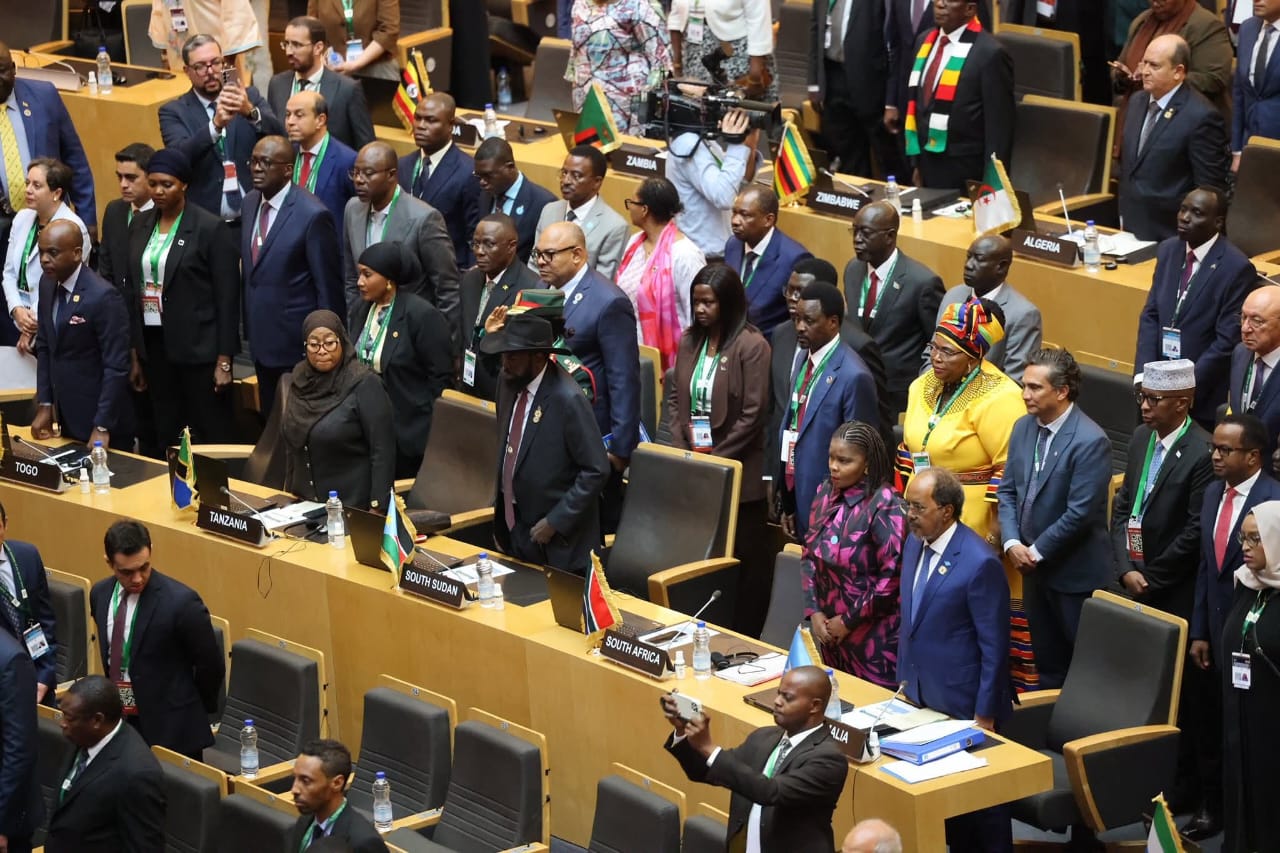
Sanctioned By the African Union, South Sudan Has Lost Its Floor and Votes. Paralysed For The Upcoming AU Summit
South Sudan enters this month’s high-level summits in Egypt as a diplomatic ghost, stripped of its right to speak or vote following a February decision by the African Union to enforce rigid financial sanctions. Unless Juba clears arrears estimated between $3 million and $6 million, the world’s youngest nation faces a total administrative freeze and the loss of its membership rights by 2027.

South Sudan Government's Policy Stagnation Fuels Another UN Sanctions Extension
Every uninvestigated atrocity, every warlord integrated into the state payroll without accountability, strengthens the hand of those in New York and other capitals who argue that sanctions must not only continue but be tightened. Washington maintains that any influx of weapons into a fractured polity where commanders have repeatedly turned arms on civilians would inevitably escalate internal strife. Juba’s envoys, tasked with making the case for relief, are left with a brief devoid of deliverables, forced to rely on appeals to sovereignty that sound increasingly hollow when the sovereign in question cannot control its own military or protect its own citizens.
Juba Retreats from Unilateral Peace Deal Amendment After Western Pressure
South Sudan's cabinet abandoned a controversial plan to weaken the legal authority of the 2018 peace agreement following severe international backlash. The reversal preserves the deal’s status as the supreme legal framework ahead of the country's planned 2026 general elections.

Kenya’s Judicial Service Commission Pushes for Data-Driven Accountability of Judges
The Kenyan Judiciary is transitioning to a transparent framework that mandates the publication of individual performance data for judges to ensure constitutional accountability. This shift requires court leadership to prioritize metrics like case clearance rates and public perception to maintain the institutional record.

Selecting the "Correct" Opposition: The Decree that Ate the Legislature
The presidential revocation of 47 SPLM-IO Members of Parliament marks a definitive crisis for the 2018 Revitalised Peace Agreement. By asserting executive authority to reshape the opposition’s legislative wing, President Salva Kiir has not merely engaged in a personnel shuffle; he has challenged the foundational principles of power-sharing and collegial collaboration. In doing so, the Presidency has exposed a dangerous gap between the "Supreme Law" of the land and the political reality of rule by decree, threatening to turn the 2026 transition into an institutional dead end.

SOUTH SUDAN JUDICIARY MANDATES ENGLISH FOR COURT JUDGMENTS: A DRAMATIC LEGAL PIVOT TOWARD THE EAST AFRICAN COMMUNITY
All judges in the Republic of South Sudan shall write their judgments in English with effect from 1st June, 2026, the Chief Justice declared.

Kenyan Court Deals Blow to Bank of South Sudan as Millions are Seized for State Debt
In a dramatic ruling that underscores the vulnerability of sovereign assets, the Kenyan Court of Appeal has paved the way for a landmark legal battle over central bank independence—even as it admitted the specific funds at the heart of the dispute have already vanished.
The South Sudan Blood Oil Trial in Sweden Nears Its Judgment
After a historic three-year legal battle, corporate executives face a definitive reckoning over their alleged complicity in a brutal resource war. Stockholm prosecutors have concluded their closing arguments, seeking multi-year prison sentences for two former Lundin Oil executives accused of aiding and abetting war crimes in Sudan between 1999 and 2003, before South Sudan’s independence.
The Ghost Ledger: How South Sudan has Entered a State of Total Fiscal Suspension
South Sudan has transitioned from a state of procedural delay to one of total fiscal suspension, attempting to authorize a 2025-2026 budget for a year that has functionally elapsed while ignoring the looming 2026-2027 statutory deadline. The executive branch has replaced formal financial oversight with a series of summary removals, resulting in the rapid displacement of ten Finance Ministers in recent years and the displacement of the head of the legislature. This institutional decay leaves the national treasury operating in a legal vacuum where public expenditure proceeds without the mandate of an active Appropriation Act.

South Sudan’s Defiance of the ACHPR Ruling Illegally Profits Terab Radio 87.6 FM
In its latest ruling, the African Commission condemned South Sudan for state-sanctioned land grabs, but Juba had already turned the illegally seized site into government-backed radio 87.6 Terab FM, hosting ministers and laundering the violation into a private asset for Mading Ngor Akec.
Toxic Defiance: How South Sudan Is Ignoring the Law and Poisoning its Future
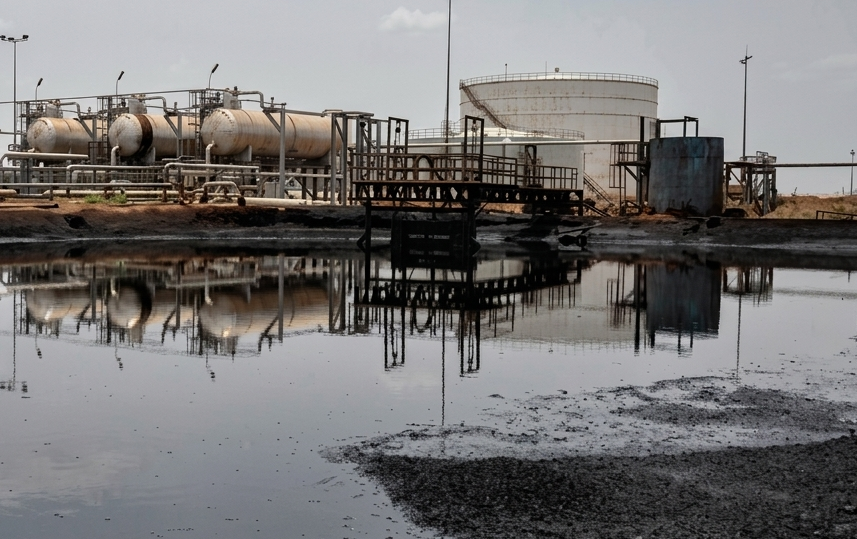
The Republic of South Sudan remains in breach of a landmark mediated settlement to remediate catastrophic oil pollution in its northern wetlands. Despite a 2021 East African Court of Justice decree, the government’s failure to properly audit toxic spills has sparked a new legal crisis over regional treaty compliance.

ACHPR Ruling on South Sudan Nationality Case Sets New Precedent for African Citizenship Rights
The African Commission ruled South Sudan’s arbitrary stripping of a high-level official’s nationality—leaving her stateless—violated the African Charter’s dignity clause, and setting a new precedent for citizenship rights in Africa.

AU Peace and Security Council Reiterates Call for the Release of First Vice President Riek Machar
Following its 1343rd meeting held on April 30, 2026, AU Peace and Security Council Calls for the Release of First Vice President Riek Machar from Detention in Juba.
D.C. District Court Rejects South Sudan’s Motion to Strike, Ordering May 8 Response to QNB’s Evidence
Judge Timothy denied the Bank of South Sudan’s motion to strike, permitting Qatar National Bank’s late-filed statement of facts to remain on the record, in a high-stakes $1 billion enforcement battle involving sovereign default and allegations of state control.
How Michael Makuei Nearly Torched South Sudan’s Peace Accord
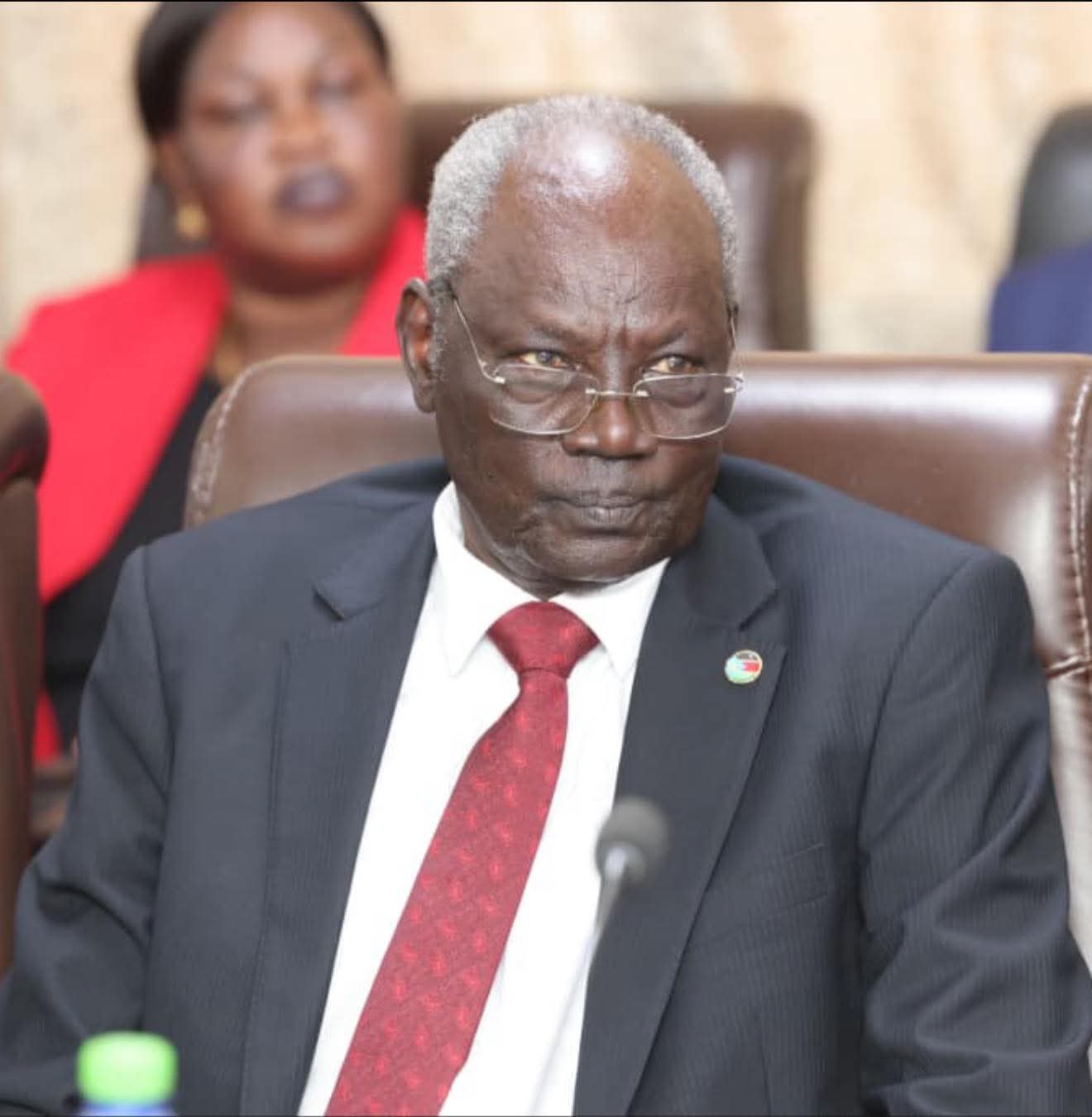
In a high-stakes gamble that bordered on institutional suicide, Justice Minister Michael Makuei Lueth attempted to dismantle the very legal framework that grants South Sudan’s government its authority. By branding the 2018 peace agreement “originally defective” and moving to bypass mandatory international oversight, Makuei didn’t just trigger a constitutional crisis—he attempted a "legal coup”. The maneuver has backfired, leaving the transitional government in a state of terminal paralysis, rejected by its own submissive parliament and stripped of its remaining domestic and international credibility.
South Sudan Embarks on Recruiting More Judges, More than a Hundred Interviewed So Far
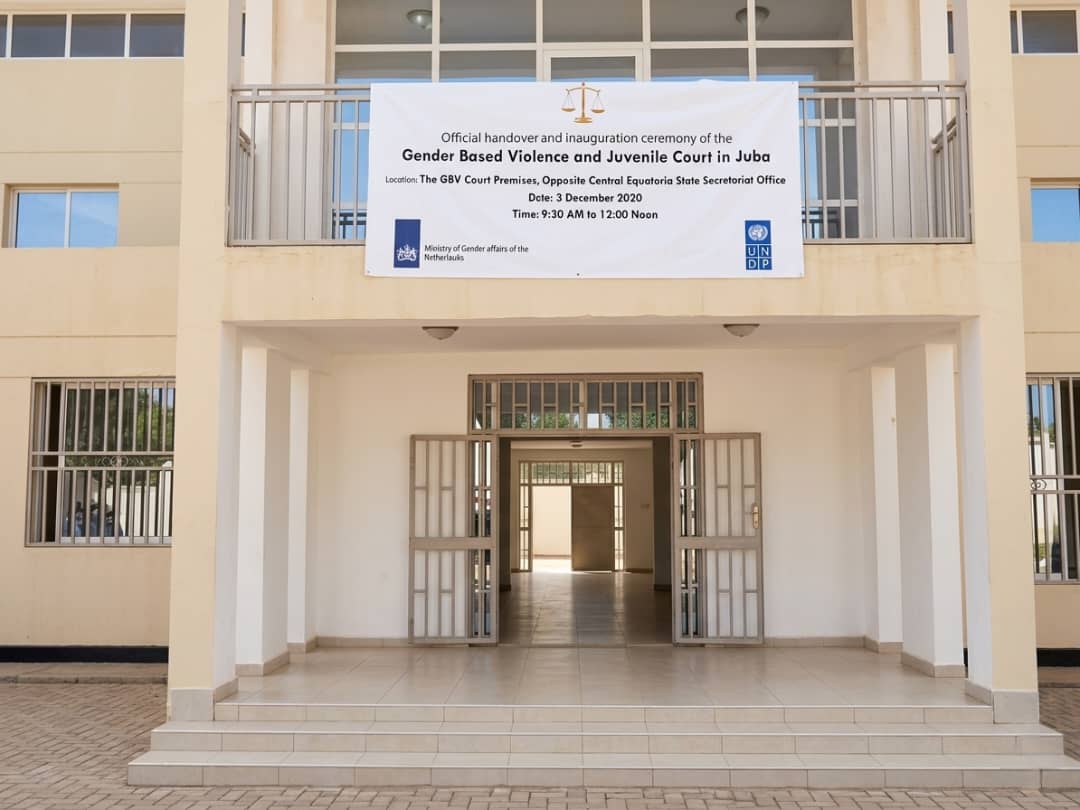
South Sudan is filling more than 100 judicial vacancies under a 2008 obsolete legal framework. While the government frames this recruitment as a necessary expansion ahead of the December 2026 elections, the process is unfolding without the institutional reforms mandated by the 2018 peace agreement. This vacuum of oversight suggests the new bench may serve as a political instrument of the executive rather than an independent arbiter of the rule of law.