
Kenyan Court Deals Blow to Bank of South Sudan as Millions are Seized for State Debt
The Index Post
May 15, 2026

Kenyan Judiciary - Nairobi
NAIROBI, Kenya — In a legal battle with sweeping implications for sovereign immunity and central bank independence across East Africa, the Kenyan Court of Appeal has delivered a split decision in a high-stakes tug-of-war between the Bank of South Sudan and a private trading company seeking to recoup millions in unpaid debts from the Juba government.
The ruling, delivered on April 30, 2026, by a three-judge bench comprising Justices F. Tuiyott, A.O. Muchelule, and G.V. Odunga, marks a critical chapter in a multi-year saga that began in the halls of international arbitration and has now landed in the heart of Kenya’s commercial justice system.
The Core of the Conflict: A Ghost from 2019
The origins of this dispute trace back to Permanent Court of Arbitration (PCA) Case No. 2019-36. In that proceeding, Gadano General Trading Company Limited (the 2nd Respondent) secured a final arbitral award against the Government of the Republic of South Sudan. While the specific nature of the original dispute was not detailed in the latest ruling, the financial fallout has been immense.
After the award was issued on June 9, 2021, Gadano moved to have the decision recognized as a formal decree by the Kenyan High Court, allowing the company to begin "garnishee proceedings"—a legal process to seize assets held by third parties to satisfy a debt.
The target of this seizure was not just any government account, but nine specific bank accounts held at Stanbic Bank Kenya Limited. Crucially, Gadano moved to include accounts belonging to the Bank of South Sudan (BOSS), arguing that the central bank was merely an extension of the South Sudanese government and should therefore be liable for its debts.
The Bank of South Sudan has fought this characterization with every legal tool at its disposal. In its petition to the Court of Appeal, the BOSS argued that it is an autonomous corporate entity incorporated under the Bank of Sudan Act of 2011.
Represented by counsel Mr. Mwangi, the BOSS asserted that it is a "banker of banks" rather than a government department. The bank’s statutory mandate includes:
- Initiating and setting monetary policy.
- Printing legal tender.
- Controlling inflation and managing foreign exchange reserves.
- Supporting international remittances for individuals and commercial banks.
Most importantly, the BOSS argued that the funds held in the targeted accounts—specifically Account Nos. 0100000296637 and 0100000296613—do not belong to the South Sudanese government. Instead, the bank contends these funds are held on behalf of its own customers and depositors, and that seizing them to pay a government debt would cause irreparable prejudice to the bank’s operations.
The Diplomatic Immunity Defense
A central pillar of the BOSS’s appeal is the claim of diplomatic immunity. The bank argued that the Kenyan courts lacked the jurisdiction to seize its assets because its accounts enjoy protection under the Vienna Convention of 1961.
This argument seeks to draw a sharp line between "commercial transactions" and the "statutory mandate" of a sovereign central bank. The BOSS maintains that it was never a party to the original arbitration between Gadano and the South Sudanese government, and therefore, its assets should be untouchable in the execution of that specific award.
The Court of Appeal’s ruling, while providing a pathway for the BOSS to continue its fight, also delivered a stinging blow regarding the immediate fate of the money.
The judges granted the BOSS "leave to appeal" the previous High Court decisions. In legal terms, this means the court found the bank’s arguments regarding its autonomy and diplomatic immunity to be "arguable" and not frivolous. The court noted that the question of whether a central bank must shoulder the state's liability is a significant legal issue that merits "serious judicial consideration".
However, the court declined to grant a "stay of execution"—the legal order that would have frozen the funds until the appeal was finished.
"Overtaken by Events": The Money is Gone
The reason for the denial of the stay is a dramatic twist in the case's timeline. According to an affidavit filed by Wahura Mwangi, a legal advisor for Stanbic Bank Kenya, the bank had already complied with a "garnishee order absolute" issued on November 20, 2024.
On March 19, 2025, Stanbic Bank remitted all sums standing in the credit of the Bank of South Sudan to the decree-holder. The amounts involved included 61,922 Euros and 69,509.48 USD.
"Currently, the 3rd respondent [Stanbic Bank] no longer holds any funds in whatever currency on behalf of the applicant," the ruling noted, concluding that the application for a stay had been "overtaken by events". The BSS had hoped to prevent further seizures if new money was deposited, but the court dismissed this as "premature and speculative," noting that garnishee orders only apply to funds held at the time the order is made.
In reaching their decision, the appellate judges leaned heavily on established Kenyan jurisprudence. They cited the 2006 case of Kenya Shell Limited v Kobil Petroleum Limited, which established that granting leave to appeal is a matter of judicial discretion that should only be refused if the applicant has "no realistic prospects of succeeding".
The court also referenced J P Machira T/A Machira & Company Advocates v Wangethi Mwangi, emphasizing that "leave" is intended to filter out "minor procedural questions" while allowing substantive rights to be determined. By granting leave, the court acknowledged that the relationship between the Bank of South Sudan and its government is a "novel point or an issue where the law requires clarifying".
What Comes Next?
The ruling leaves the Bank of South Sudan in a difficult position. While they have the legal right to argue before the Court of Appeal that their accounts should never have been seized, the specific funds in question have already been transferred out of their control.
If the BOSS eventually wins its appeal, it may set a landmark precedent protecting central bank assets from being used to pay general sovereign debts. However, the immediate loss of over $130,000 (when combining the USD and Euro amounts) serves as a stark reminder of the risks sovereign entities face when their financial independence is questioned in foreign courts.
Furthermore, the court refused to stay further proceedings in the High Court, noting that the BOSS failed to demonstrate "exceptional circumstances" or even clarify exactly what proceedings were still pending.
As it stands, the case of Bank of South Sudan v Government of South Sudan & 3 others remains a cautionary tale for international banks and governments alike. It underscores the vulnerability of central bank reserves to private litigation and highlights the complex, often messy intersection of international arbitration and local enforcement.
For now, the legal world watches closely as the Bank of South Sudan prepares to argue its case on the merits—hoping to reclaim not just its money, but its status as an independent pillar of the South Sudanese state.
More from The Index Post

Kenya’s Judicial Service Commission Pushes for Data-Driven Accountability of Judges
The Kenyan Judiciary is transitioning to a transparent framework that mandates the publication of individual performance data for judges to ensure constitutional accountability. This shift requires court leadership to prioritize metrics like case clearance rates and public perception to maintain the institutional record.

SOUTH SUDAN JUDICIARY MANDATES ENGLISH FOR COURT JUDGMENTS: A DRAMATIC LEGAL PIVOT TOWARD THE EAST AFRICAN COMMUNITY
All judges in the Republic of South Sudan shall write their judgments in English with effect from 1st June, 2026, the Chief Justice declared.
The South Sudan Blood Oil Trial in Sweden Nears Its Judgment
After a historic three-year legal battle, corporate executives face a definitive reckoning over their alleged complicity in a brutal resource war. Stockholm prosecutors have concluded their closing arguments, seeking multi-year prison sentences for two former Lundin Oil executives accused of aiding and abetting war crimes in Sudan between 1999 and 2003, before South Sudan’s independence.

South Sudan’s Defiance of the ACHPR Ruling Illegally Profits Terab Radio 87.6 FM
In its latest ruling, the African Commission condemned South Sudan for state-sanctioned land grabs, but Juba had already turned the illegally seized site into government-backed radio 87.6 Terab FM, hosting ministers and laundering the violation into a private asset for Mading Ngor Akec.

AU Peace and Security Council Reiterates Call for the Release of First Vice President Riek Machar
Following its 1343rd meeting held on April 30, 2026, AU Peace and Security Council Calls for the Release of First Vice President Riek Machar from Detention in Juba.
D.C. District Court Rejects South Sudan’s Motion to Strike, Ordering May 8 Response to QNB’s Evidence
Judge Timothy denied the Bank of South Sudan’s motion to strike, permitting Qatar National Bank’s late-filed statement of facts to remain on the record, in a high-stakes $1 billion enforcement battle involving sovereign default and allegations of state control.
How Michael Makuei Nearly Torched South Sudan’s Peace Accord
In a high-stakes gamble that bordered on institutional suicide, Justice Minister Michael Makuei Lueth attempted to dismantle the very legal framework that grants South Sudan’s government its authority. By branding the 2018 peace agreement “originally defective” and moving to bypass mandatory international oversight, Makuei didn’t just trigger a constitutional crisis—he attempted a "legal coup”. The maneuver has backfired, leaving the transitional government in a state of terminal paralysis, rejected by its own submissive parliament and stripped of its remaining domestic and international credibility.
South Sudan Embarks on Recruiting More Judges, More than a Hundred Interviewed So Far
South Sudan is filling more than 100 judicial vacancies under a 2008 obsolete legal framework. While the government frames this recruitment as a necessary expansion ahead of the December 2026 elections, the process is unfolding without the institutional reforms mandated by the 2018 peace agreement. This vacuum of oversight suggests the new bench may serve as a political instrument of the executive rather than an independent arbiter of the rule of law.
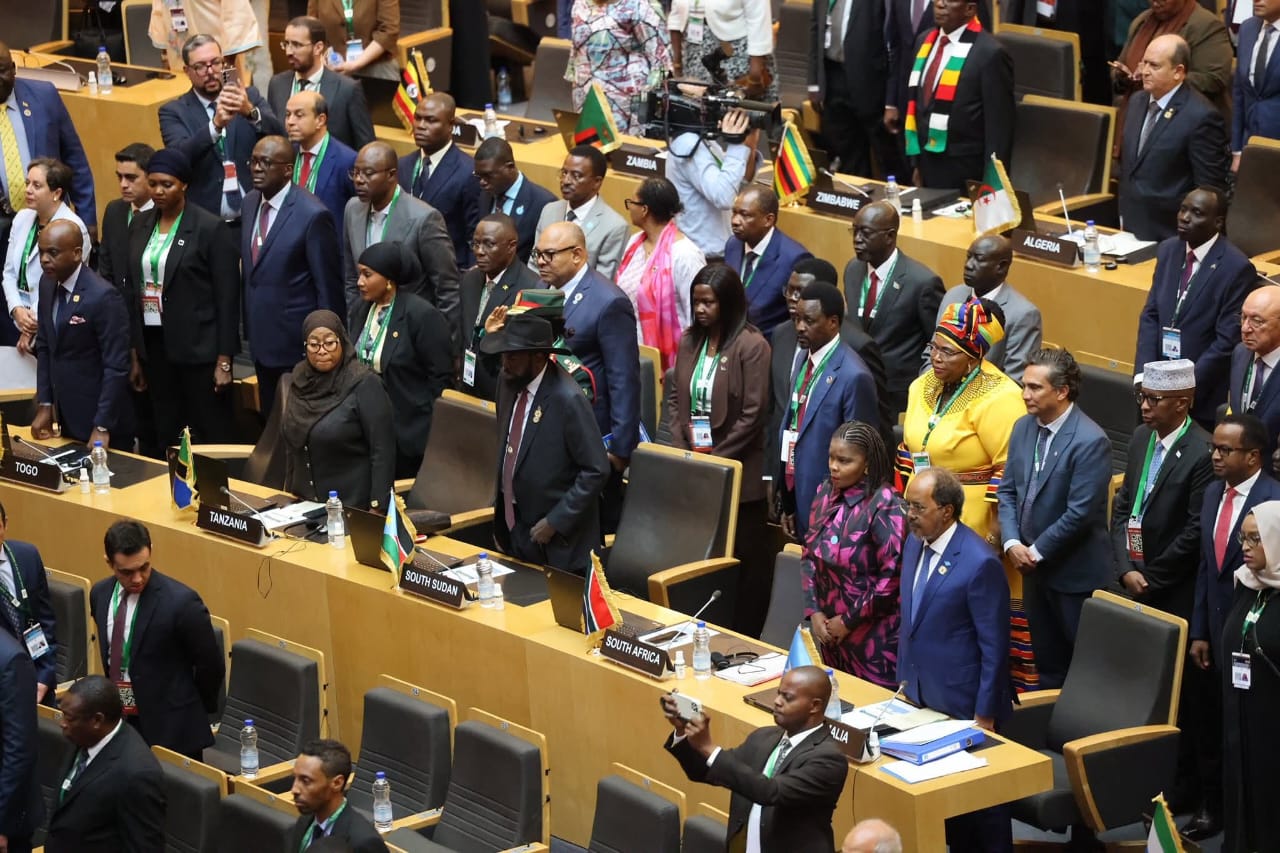
Sanctioned By the African Union, South Sudan Has Lost Its Floor and Votes. Paralysed For The Upcoming AU Summit
South Sudan enters this month’s high-level summits in Egypt as a diplomatic ghost, stripped of its right to speak or vote following a February decision by the African Union to enforce rigid financial sanctions. Unless Juba clears arrears estimated between $3 million and $6 million, the world’s youngest nation faces a total administrative freeze and the loss of its membership rights by 2027.

South Sudan Government's Policy Stagnation Fuels Another UN Sanctions Extension
Every uninvestigated atrocity, every warlord integrated into the state payroll without accountability, strengthens the hand of those in New York and other capitals who argue that sanctions must not only continue but be tightened. Washington maintains that any influx of weapons into a fractured polity where commanders have repeatedly turned arms on civilians would inevitably escalate internal strife. Juba’s envoys, tasked with making the case for relief, are left with a brief devoid of deliverables, forced to rely on appeals to sovereignty that sound increasingly hollow when the sovereign in question cannot control its own military or protect its own citizens.
Juba Retreats from Unilateral Peace Deal Amendment After Western Pressure
South Sudan's cabinet abandoned a controversial plan to weaken the legal authority of the 2018 peace agreement following severe international backlash. The reversal preserves the deal’s status as the supreme legal framework ahead of the country's planned 2026 general elections.

Selecting the "Correct" Opposition: The Decree that Ate the Legislature
The presidential revocation of 47 SPLM-IO Members of Parliament marks a definitive crisis for the 2018 Revitalised Peace Agreement. By asserting executive authority to reshape the opposition’s legislative wing, President Salva Kiir has not merely engaged in a personnel shuffle; he has challenged the foundational principles of power-sharing and collegial collaboration. In doing so, the Presidency has exposed a dangerous gap between the "Supreme Law" of the land and the political reality of rule by decree, threatening to turn the 2026 transition into an institutional dead end.
The Ghost Ledger: How South Sudan has Entered a State of Total Fiscal Suspension
South Sudan has transitioned from a state of procedural delay to one of total fiscal suspension, attempting to authorize a 2025-2026 budget for a year that has functionally elapsed while ignoring the looming 2026-2027 statutory deadline. The executive branch has replaced formal financial oversight with a series of summary removals, resulting in the rapid displacement of ten Finance Ministers in recent years and the displacement of the head of the legislature. This institutional decay leaves the national treasury operating in a legal vacuum where public expenditure proceeds without the mandate of an active Appropriation Act.
HOW SOUTH SUDAN'S CONSTANT CONTRACT BREACHES GIVE RISE TO $2B PLUS INDEFENSIBLE LEGAL BATTLE
The Republic of South Sudan is drowning in over $2.3 billion of international litigation sparked by a systemic culture of contractual bad faith and administrative paralysis. Despite progressive investment laws on the books, Juba’s habit of ignoring signed settlements and arbitrarily seizing assets has transformed the nation into a primary "no-go" zone for global capital.
The Blue House in Court: South Sudan’s Widely Condemned National Security Law Faces EACJ Reckoning
The East African Court of Justice is weighing a pivotal challenge to South Sudan’s National Security Service Amendment Act, which preserves warrantless arrest powers despite constitutional safeguards—a key test (Reference No. 43 of 2024) of regional judicial supremacy over domestic repression laws.
Toxic Defiance: How South Sudan Is Ignoring the Law and Poisoning its Future
The Republic of South Sudan remains in breach of a landmark mediated settlement to remediate catastrophic oil pollution in its northern wetlands. Despite a 2021 East African Court of Justice decree, the government’s failure to properly audit toxic spills has sparked a new legal crisis over regional treaty compliance.

ACHPR Ruling on South Sudan Nationality Case Sets New Precedent for African Citizenship Rights
The African Commission ruled South Sudan’s arbitrary stripping of a high-level official’s nationality—leaving her stateless—violated the African Charter’s dignity clause, and setting a new precedent for citizenship rights in Africa.